
How Workplace Giving Builds Stronger Employees and Communities
Global employee engagement is stuck near its lowest point in more than a decade, and most companies are still reaching the same handful of fixes — engagement surveys, recognition shout-outs, the occasional catered lunch.
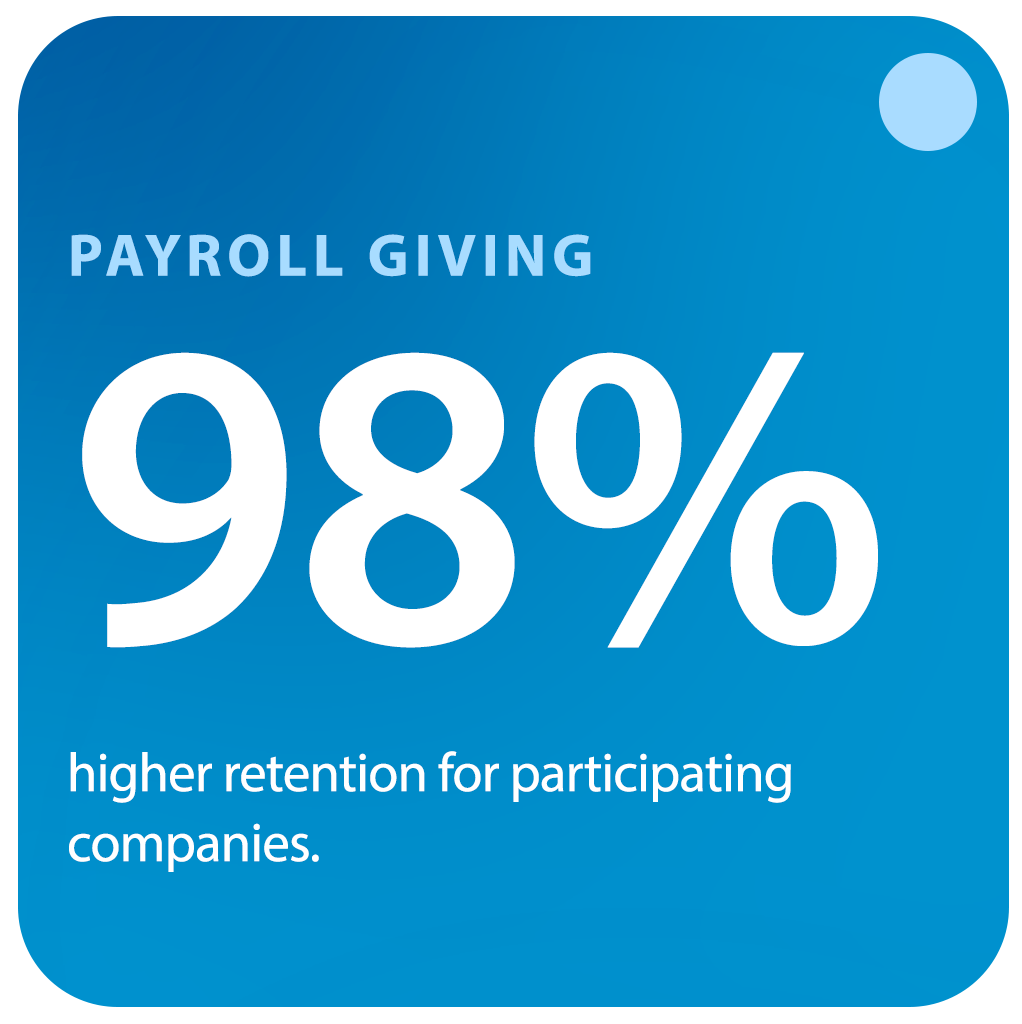
One lever keeps showing up in the research and rarely makes it onto the engagement roadmap: giving back. Companies that offer payroll giving report 98% higher employee retention than companies that don’t, and it isn’t hard to see why — giving connects people to something bigger than their job description.
This isn’t a fundraising pitch. It’s a case for treating workplace giving as an engagement strategy first — one that happens to move real money into the communities your employees care about along the way.
Why Giving Back Strengthens Employee Engagement
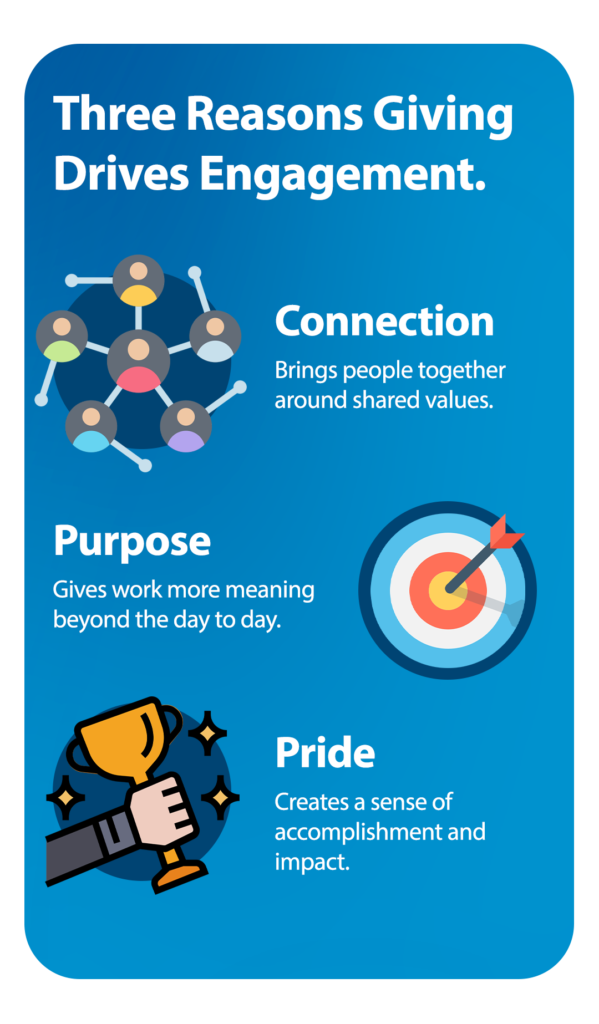
The link between giving and engagement isn’t a coincidence. Employees who give and volunteer through their employer report feeling more connected to their company’s mission than those who don’t, largely because giving turns an abstract value statement into something they actually do.
Our research on workplace giving found that workplace giving campaigns raise an estimated $5 billion annually for the social sector, much of it steady, unrestricted support nonprofits can plan around. That same research found 71% of employees say it matters that their workplace culture supports giving and volunteering — the expectation is already there, waiting for a program to meet it.
A well-designed employee giving program turns corporate social responsibility from a policy statement into something employees experience firsthand, and that shift from passive to lived value is exactly where engagement gains show up.
Ways to Turn Giving Into Engagement
- Offer employees a choice of causes, not one default option. A single company-wide charity feels imposed; a broad list of causes and verified nonprofits employees can choose from feels personal.
- Make giving effortless. Payroll deduction and one-click volunteer sign-ups remove the friction that keeps good intentions from turning into action.
- Match dollars and match hours. A company match on donations—and recognition for volunteer time—signals that leadership values the gift, not just the good press.
- Celebrate participation publicly. Share the collective impact—total raised, hours volunteered, causes supported—so employees see their individual gift as part of something larger.
“Workplace giving isn’t a perk on the side of company culture — done well, it becomes the culture.“
These moves work because they treat giving as part of company culture rather than a once-a-year campaign competing for attention with everything else on an employee’s calendar.
Why It Matters for the Community
The same programs that lift engagement inside a company create real impact outside it. Nonprofits depend on workplace giving precisely because it’s steady and predictable, unlike one-time appeals that spike around year-end and disaster response.
Volunteering follows the same pattern. The average corporate volunteer participation rate sits at 33%, and the best-run programs push well past that—meaning there’s real room to grow both the employee experience and the community outcome at the same time.
None of this requires a massive program to matter. A local food bank gains a dependable volunteer shift; a youth mentoring nonprofit gains a steady base of monthly donors; and employees gain a visible, personal answer to “what does my company actually stand for?”
Get Started
Workplace giving sits at a rare intersection: the same program that strengthens retention and culture inside your walls also strengthens the community right outside them.
When companies make it easy to give back, employees notice and so does the community around them. That’s not a coincidence; it’s the design.
Ready to build (or strengthen) your program? Check out the full business case for employee volunteering for a walkthrough on structuring choice, matching, and recognition into a program employees actually use.

Get Resources and Insights Straight To Your Inbox
Explore More Articles
Corporate Volunteering: The Business Case for an Employee Volunteer Program
Corporate volunteering has evolved well beyond the occasional company service day. A well-designed employee volunteer program can strengthen employee engagement, reinforce company culture, develop leadership skills,…

Environmental Awareness Month
Every September, environmental organizations around the Nation come together in recognition of Environmental Awareness Month, with a goal to raise awareness about environmental issues that…
Join Feeding America and Take Action During Hunger Action Month
No one should have to go hungry in the richest country in the world — yet millions of Americans don’t have enough to eat. Our…
Get Resources and Insights Straight To Your Inbox
Receive our monthly/bi-monthly newsletter filled with information about causes, nonprofit impact, and topics important for corporate social responsibility and employee engagement professionals, including disaster response, workplace giving, matching gifts, employee assistance funds, volunteering, scholarship award program management, grantmaking, and other philanthropic initiatives.